

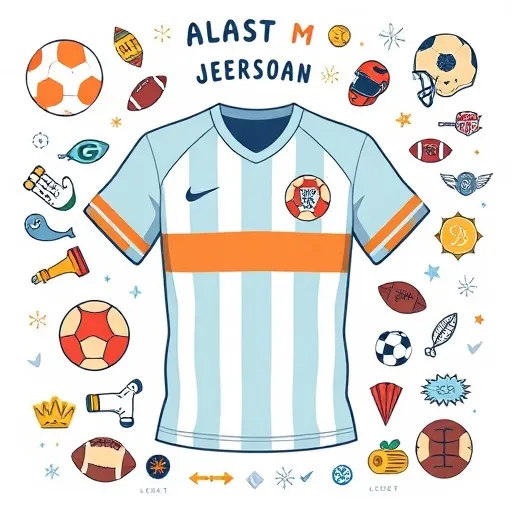
Custom sportswear tr
Why Custom Football Jerseys Are Having a Moment
Something's definitely shifting in the world of sportswear and athletic apparel. Not too long ago, grabbing a jersey meant scrolling through a few options, picking a size and a colorway, and that was pretty much it. Fast forward to 2026, and players and supporters alike are chasing after custom football jerseys that actually mean something—pieces that speak to their identity, their team culture, or the community they rep. A handful of forces are fueling this whole movement, and honestly, they're all pretty exciting.
First off, on-demand manufacturing has completely changed the game. Short production runs are now genuinely affordable, which means even a tiny amateur club can order 15 unique shirts without torching their budget. That's a massive deal for grassroots football and local clubs who never had access to this kind of thing before. Second, digital design tools let just about anyone mock up a shirt in minutes—no design degree, no fancy software skills required. Third, social media culture absolutely rewards originality; a one-of-a-kind custom kit is content gold for any football fan looking to stand out. And finally, growing sustainability concerns are nudging buyers toward smaller, made-to-order batches instead of the old overstocked mass production model.No Deposit Bonus
The result? The bespoke teamwear market is wider and way more accessible than it's ever been. Whether you're sorting out kit for a five-a-side squad or designing a statement fan shirt, the options for custom football jerseys in 2026 are honestly impressive—and they keep getting better.
On-Demand Production and Digital Design Tools Are Reshaping Custom Football Jerseys for Amateur Clubs
Before you get lost in colors, logos, and crest designs, it really helps to understand what makes a kit actually perform on the pitch. A football jersey isn't just a glorified t-shirt—it's a piece of athletic equipment, and the details matter way more than most people realize. When you're investing in custom football jerseys, knowing your fabrics and construction is half the battle.No Deposit Bonus
The best performance football apparel leans on lightweight moisture-wicking polyester blends that pull sweat away from your skin and dry fast. Look for fabrics with a breathable mesh back panel and side ventilation zones—these make a genuine difference during 90 minutes of nonstop running. Recent leaps in recycled performance fabric mean you can now snag eco-friendly options that don't sacrifice durability or that soft, broken-in feel.
Fit is where custom football jerseys really shine. Off-the-shelf shirts force you into a compromise; made-to-measure or semi-custom sizing lets you pick between athletic fit, regular fit, and relaxed supporter fit. If you're ordering for a full squad, ask your supplier about size sampling before committing—nothing kills morale quite like a shirt that rides up or feels like you're wearing a tent. Reinforced flatlock seams, a sturdy collar, and double-stitched hems are the hallmarks of a shirt that survives a full football season. Cheap kits tend to fail at the seams and the numbers first, so check construction quality before you settle on a supplier.
Designing Custom Football Jerseys with Story, Color Palette, and Sports Typography That Actually Works
This is the fun part—but it's also where a lot of people get stuck. The most memorable custom football jerseys come from a clear idea. Maybe it's your club history, your hometown pride, a charity cause, or a color palette that means something to your team. Anchor your design in that story, and every other decision—colors, fonts, patterns—gets way easier.
Pick two or three core colors and stick to them. Contrast is everything: your squad numbers and player names need to be clearly legible from a distance, both for referees and for spectators in the stands. Test your palette in grayscale—if the numbers vanish in black and white, they'll be brutal to read on a muddy pitch too. Font choice is quietly important as well. A bold, blocky number font reads better at speed than a fancy script. Many suppliers offer a library of sports typography options, or you can upload your own—just make sure it's properly licensed for apparel use. Standard placement includes the club crest on the left chest, a sponsor or team name across the center, and numbers on the back. But with custom football jerseys, you've got freedom: sleeve prints, collar detailing, custom jock tags, and even inside-neck personalization are all fair game. Just keep the overall layout clean—clutter is the enemy of a sharp kit.
Sublimation Printing, Embroidery, and Heat-Transfer Vinyl Compared for Personalized Football Shirts
Once your design is locked in, how it actually gets onto the shirt matters for both looks and longevity. Sublimation printing infuses the design directly into the fabric, so it never cracks or peels—ideal for full-color, all-over patterns and the go-to method for most custom team kits today. Heat-transfer vinyl works great for names and numbers on smaller orders, with fast turnaround and crisp edges, though it can wear over many washes if not applied well. Embroidery is best for crests and logos, giving a premium, tactile feel—perfect for club badges on personalized football shirts. And screen printing stays cost-effective for larger batches of simple designs, with excellent color payoff but less suited to photo-realistic graphics. A good supplier will advise you on which method suits your design, order size, and budget—don't be afraid to ask questions.No Deposit Bonus
Ordering custom football jerseys can go brilliantly or badly, and the difference usually comes down to preparation. Always ask for a physical sample or detailed digital proof before a full production run—colors look different on screen than on fabric. Size charts vary wildly between suppliers, so if you're ordering for a team, collect measurements rather than guessing, and consider sizing up for supporter fit shirts meant to be worn over other clothing. Custom production takes time—often two to four weeks—so plan around your season start or tournament dates. And many suppliers now offer low or no minimums thanks to on-demand printing, which is fantastic for small clubs and individual buyers chasing a single custom football jersey.
Care Tips, Sustainability Practices, and Common Mistakes to Avoid with Custom Football Jerseys
A custom shirt is an investment, so treat it like one. Wash inside out in cold water to protect prints and colors, skip the fabric softener (it breaks down moisture-wicking treatments), air dry whenever possible, and keep sharp objects away from sublimated areas—snags are the most common form of damage. In 2026, buyers are asking harder questions about where their sportswear comes from, and the custom jersey space has responded. Many suppliers now use recycled polyester from post-consumer plastics, offer water-based inks, and run made-to-order production that minimizes deadstock. If sustainability matters to you, ask potential suppliers about their materials and waste policies.
We've seen plenty of custom football jerseys projects go sideways, and the same pitfalls keep popping up. Skipping the proof stage is the single biggest cause of disappointment. Ignoring contrast leads to beautiful designs that are unreadable on the pitch. Ordering too late leaves you scrambling before matchday. Overcomplicating the design almost always backfires—simplicity wins. And choosing on price alone often costs more long-term through replacements and reprints. Custom football jerseys aren't just apparel—they're a statement about who you are, what your team stands for, and how seriously you take your game. Plan carefully, design with purpose, and partner with a kit supplier who treats your project with the care it deserves.